

16 Days Self Drive Around Lake Victoria – East Africa Road Trip Itinerary
16 Days Self Drive Around Lake Victoria is ideal for travelers interested in exploring the three differing countries i.e Uganda, Rwanda, Kenya, Tanzania as they move around the stunning Lake Victoria.
Detailed Itinerary of the 16 Days Self Drive Around Lake Victoria
Day 1: Entebbe to Ssese Islands
Your journey begins at Entebbe, Uganda’s compact, colonial-era lakeside city that wears its past lightly. After picking up your hired 4WD and running through a thorough pre-departure checklist — two spare tyres, high-lift jack, jerry can, offline maps loaded on your phone — drive the 40 km south-west on the Masaka Highway to Nakiwogo Landing Site near Mpigi, where the ferry departs for the Ssese Islands.
The MV Kalangala or one of the smaller private boats makes the 45–90 minute crossing to Kalangala town on Bugala Island — the largest of the 84 Ssese Islands scattered across the north-western corner of Lake Victoria. The ferry experience is a gentle initiation into the pace of lake life: fishermen haul their catches aboard, traders balance impossible towers of produce, and the open lake stretches in every direction, its far shore invisible beyond the horizon.
On arrival, make your way through Kalangala’s bustling trading centre and check into one of the island’s lodges — Ssese Island Beach Hotel or the more rustic Palm Beach Resort are the go-to options, both sitting directly on long, sandy, forest-fringed lake beaches. Spend the afternoon swimming (the island’s beaches are bilharzia-free), walking through the oil palm plantations, and eating fresh Nile perch grilled with lemon, chilli and cassava. The evening sky over the lake, with no light pollution for 200 kilometres, is extraordinary.
Day 2: Ssese islands to Masaka
Rise before the sun and walk to the beach edge to catch the dawn fishermen launching their wooden dugouts into the fog-softened lake — one of the quietest, most beautiful sights on the circuit. After breakfast, take the return ferry to the mainland (first departure usually 7 AM; confirm the night before) and drive south on the B273 toward Masaka, stopping en route at Lake Nabugabo.
Lake Nabugabo is a small satellite lake separated from Lake Victoria by a narrow sand spit that formed some 4,000 years ago. Because it has been hydrologically isolated from the main lake for millennia, it harbours endemic cichlid fish species found nowhere else on earth — an accidental evolutionary laboratory. More importantly for the traveller, it is safe to swim in (Nabugabo lacks the bilharzia snails that make Lake Victoria itself unsafe for bathing), and the forested lakeshore is excellent birdwatching habitat.
Continue south to Masaka — Uganda’s fourth-largest city, rebuilt after Idi Amin’s forces and Tanzanian liberation troops left it largely in ruins in 1979. Modern Masaka is a thriving regional hub with good fuel stations, a well-stocked supermarket for provisioning, and a lively local market. Stay overnight at a Masaka guesthouse; the evening meal of matoke (steamed green banana) with groundnut stew is quintessentially Ugandan.
Day 3: Masaka to Bukoba
Depart Masaka early. The drive south through Rakai District on the B273 is 93 km to the Mutukula/Mutukula border — Uganda’s main southern frontier with Tanzania. The road passes through gently undulating terrain of banana groves, subsistence farms, and red-earth compounds; occasional roadside cassava sellers and boda-boda riders are the only traffic. Cross by mid-morning to allow enough time for border formalities.
The Mutukula crossing is open from 7 AM to 6 PM and is generally efficient — budget 1.5 to 2 hours. Tanzania requires a separate tourist visa (USD 50 single entry; USD 100 multiple entry), payable in cash. You will also need to purchase a Temporary Vehicle Import Permit (TIP) and COMESA Yellow Card third-party insurance at the border window. Have all documents organised in a clear folder before you queue.
On the Tanzanian side, the road quality changes noticeably. Drive north-west on the T4 road to Bukoba — a lakeside city of gracious tree-lined streets, German colonial buildings, and the most civilised atmosphere anywhere on the circuit’s Tanzanian leg. Check into the Walkgard Hotel or the Bukoba Beach Hotel and walk the evening waterfront as the MV Victoria ferry announces its arrival with a deep horn blast across the copper-coloured water.
Day 4: Bukoba to Buringi Chato Game reserve
Leave Bukoba in the early morning and head south-east on the B8. The road climbs through the Kagera highlands — one of Tanzania’s great under-visited landscapes, with rolling tea-green hills, sisal plantations, and the granite kopjes that begin to define the geology as you drive toward the Mwanza plateau. Stop in Biharamulo (about halfway) for fuel and lunch; the town has a dramatic German-era fort on a hilltop that is worth a 20-minute detour.
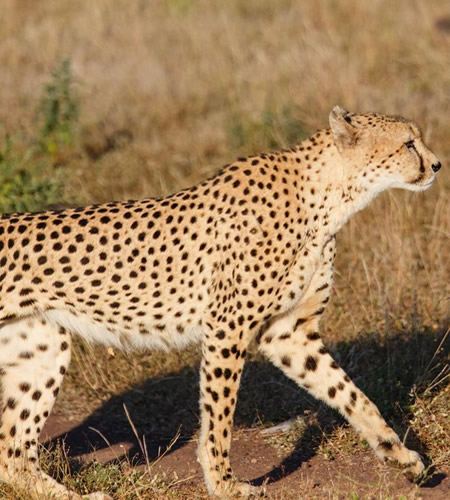 Your destination is the newly gazetted Burigi-Chato National Park, Tanzania’s 22nd national park, established in 2019 from two formerly separate game reserves — Burigi and Biharamulo — straddling the western shore of Lake Victoria. The park stretches across 2,200 square kilometres of miombo woodland, papyrus swamps, and open grassland and is still a genuine frontier destination: wildlife is abundant but tourism infrastructure is minimal, which means you will almost certainly have any sighting entirely to yourself.
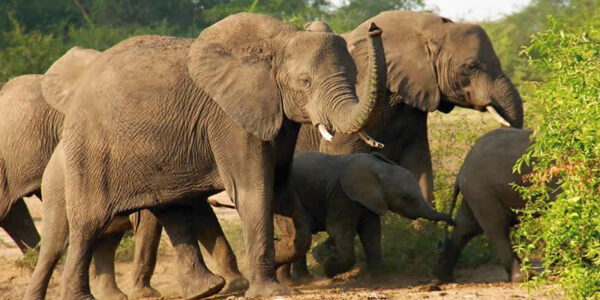
Burigi-Chato harbours hippos (some of the densest populations in Tanzania), Nile crocodiles, elephants, buffalo, topi, reedbuck, and a rich assemblage of predators including lion, leopard, and spotted hyena. The park’s swampy inlets along the lakeshore are exceptional for waterbirds — shoebill stork, African fish eagle, and the elusive papyrus gonolek can all be found here. Check in at the park’s tented camp or camping site.
Day 5: Full Day Game Drive
Wake at first light for the morning game drive — the golden hour between 6 and 9 AM when predators are still active and the light is low and warm. Burigi-Chato’s miombo woodland is especially beautiful in early morning, when dew hangs on the long grass and elephant herds move silently between the fever trees. The park’s rangers are knowledgeable and, since the park receives only a handful of visitors per day, you will receive genuinely personal guiding rather than the formulaic commentary common in busier parks.
The park’s wetland edges are the standout wildlife habitat. The papyrus swamps along the lakeshore are home to the shoebill stork — a prehistoric-looking bird the size of a small child, with a shoe-shaped bill perfectly evolved for hunting lungfish in shallow swamps. Spotting one, motionless as a garden ornament above the papyrus stems, is one of East Africa’s great wildlife experiences. Lake circuits by boat are sometimes available through the park’s ranger station — worth enquiring about the evening before.
The afternoon drive should focus on the open grassland sections in the park’s centre, where topi and reedbuck graze in large herds and lions are occasionally spotted resting in shade. Return to camp by sunset and cook over the campfire — the night sounds of Burigi-Chato, entirely free of tourist traffic noise, include hippo grunts from the swamp and the irregular cackling of spotted hyenas hunting in the dark.
Day 6: Buringi Chato to Mwanza
Depart Burigi-Chato after a final early morning walk and drive east on the B8 toward Mwanza, Tanzania’s second-largest city. The road is one of the most visually arresting on the entire circuit: as you approach Mwanza, the landscape becomes increasingly bizarre — enormous rounded granite boulders, some the size of houses, are stacked on top of each other like the discarded toys of a giant. These kopjes (from the Afrikaans for “little heads”) are the defining geological feature of the Lake Victoria basin and are estimated to be over 2.5 billion years old.
Mwanza itself is a city of 900,000 people built between, around, and seemingly on top of these boulders. The famous Bismarck Rock — named by German colonial surveyor Hauptmann von Gravenreuth in 1890 — is a balanced-boulder formation jutting into the harbour that has become the city’s symbol. Walk the fish market at Mwanza’s Kirumba port in the afternoon, where Nile perch the size of labradors are sold by the kilo alongside baskets of dried dagaa (lake sardines) that perfume the entire waterfront.
Check into one of Mwanza’s better hotels — the Isamilo Lodge or the Tilapia Hotel (which has a lakeside swimming pool) are the reliable choices. In the evening, eat at a local restaurant on the waterfront: fresh tilapia grilled whole over charcoal with pilipili hoho (chilli pepper) and ugali is the undisputed best meal on the circuit.
Day 7: Mwanza to Budda
This is the day the itinerary shifts gear entirely. Drive south-east from Mwanza on the B8 for about 80 km to the Ndabaka Gate — the western entrance to the Serengeti National Park. This is the least-visited of the Serengeti’s gates, which means the Western Corridor that you’ll drive through is far quieter than the central Seronera area. Pay the Tanzania National Parks entrance fee at the gate (currently approximately USD 70 per person per day, payable by card), have the ranger record your vehicle details, and enter.
The Western Corridor is defined by the Grumeti River — a sluggish, crocodile-dense river lined with enormous fig trees and fever acacias that winds through the corridor from west to east. In June and July, when the wildebeest migration passes through this corridor in their northward push, the river crossings here can be as dramatic as those on the Mara River further north. Outside migration season, the corridor is excellent for resident game: large hippo pools, crocodile-lined banks, huge herds of buffalo, topi, impala, and reliably good lion sightings.
Drive the full corridor to the Seronera area in the centre of the park, stopping frequently for game. Arrive at your accommodation — the Seronera Wildlife Lodge (inside the park) or the Serengeti Serena or Four Seasons if budget allows — before the park’s internal driving curfew at dusk.
Day 8 : Game drive in Serengeti National Park
Wake at 5:30 AM and be in your vehicle before 6 AM. The early morning in the Serengeti is unlike anywhere else in the world: a vast copper-gold light rolls across the grassland from the east, silhouetting acacia trees and illuminating dust-cloud herds in warm amber. Cheetahs scan from termite mounds. Lionesses suckle cubs beneath flat-topped acacias. Hyenas trot purposefully back to their dens after a night’s hunting.
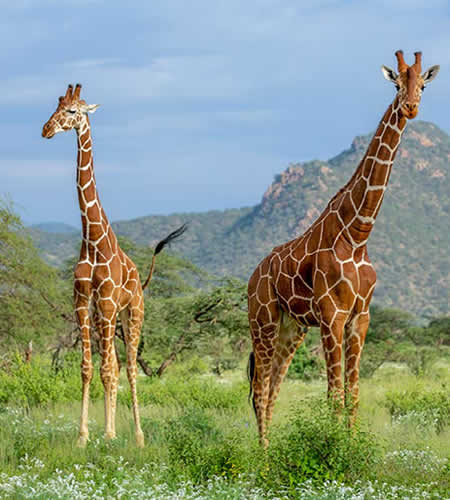 Spend the morning exploring the Seronera Valley — the Serengeti’s most consistently productive game-viewing area, threaded by the Seronera River with its fig-tree gallery forest and resident leopard population. Leopards are regularly seen here draped over branches, their spotted coats half-hidden in the dappled light — some of the most reliable leopard sightings in East Africa. Return to the lodge or camp for lunch and a midday rest (the park can be driven during midday but game is less active).
The afternoon drive should push north toward the Lobo area if you’re in June–July (following the migration) or south toward Ndutu in the short rains season (November–December, when wildebeest calve in the southern plains). As the sun drops, position yourself on an elevated vantage point — the light turns the grass to liquid gold and photographs from this hour carry the full drama of what the Serengeti is.
Day 9: Second Game drive in Serengeti National Park
A second full day in the Serengeti is not a luxury — it is a necessity. No single day can encompass the scale and variety of the ecosystem, and the game viewing compounds with familiarity: on your second morning you’ll know which kopje the lions favour, which river bend the hippos use, and where the cheetahs tend to be at dawn. Drive north of Seronera into the short grass plains around Klein’s Gate, where wildebeest and zebra move in vast, continuous columns during migration season.
 The triangle formed by the Mara and Talek rivers (the “Mara Triangle”) is managed separately from the main reserve and generally has better road maintenance and slightly