
How to plan a self-guided trip to East Africa
East Africa, also known as Eastern Africa or the East of Africa, is a region at the eastern edge of the African continent, distinguished by its unique geographical, historical, and cultural landscape. In a narrow sense, particularly in English-speaking contexts, East Africa refers to the area comprising Kenya, Tanzania, Uganda, Rwanda, Burundi, Democratic Republic of Congo and Somali.
Planning a self-driving trip to East Africa requires extensive research and careful preparation, as the areas diverse regions offer varying climates, road conditions, and safety considerations. Popular destinations are in Bwindi impenetrable national park, Volcanoes national park, Masai mara national park and Serengeti national park, where you can explore incredible landscapes and see wildlife at your own pace.
Make a list of places you want to see
When you are planning a trip to East Africa, you and your road trip buddies or family should each create a list of the places you want to see. Everyone has a different dream self-guided itinerary, and it is important to merge the different preferences. Oftentimes the majority of stops will overlap, but if more of you research your route, you might just find some hidden gems to include in your itinerary and it will be a great trip for everyone.
There will be some activities like the gorilla, chimpanzee and golden money tracking which will need to be booked and paid in advance before your arrival to East Africa for your road trip.
Find the best route for your road trip
The best route for your road trip might not be the one you expect. So be sure to move around all your stops in Google Maps, Maps. me or in whatever navigation software you use. If the road trip map looks messy once you have entered all stops, you should definitely reorder them. That way, you can save fuel and limit the car’s exhaust.
Sometimes the direct route between two locations is not the best route overall or the most scenic one, so click on marked spots along the way. The people from your car rental company will always be available if you need any assistance with the route.
Check the individual distances on google maps & look up the driving time
And do not forget to adjust the driving time based on your vehicle. Some cars cannot drive full speed on certain terrain some roads are tarmacked while the roads in most of the remote areas of East Africa are dirt roads. Alternatively, you might have a different speed limit if you are driving with a Landcruiser.
It might be better to plan an additional stop if the distance is too long. There are bound to be hidden gems along the way, so just split everything above 500 km, or ideally even 250 km, into a two-day drive. This way, you will be able to see more and feel less exhausted.
Doing this helps you schedule your trip and make it a lot easier to know how much time you have for exploration at each destination.
Determine the length of your road trip
Figuring out how long your planned trip will be consists of three steps. If you have a more open time frame, you can simply follow the steps below.
When you work with a limited timeframe, which is the most likely scenario, it is best to make a list of your priorities. You might have to skip some things while planning your intended road trip itinerary. If you end up not needing your buffer days, you can always add them again during your road trip. The East African self-guided safari to Uganda, Rwanda, Kenya and Tanzania is best done in 35 days.
Check your route can be driven with your rental car
There might be restrictions if you do not book a specific package. Meanwhile, other road trip routes might require a 4WD. So be sure to look for a car, RV, or camper van that is suitable for your route. The Toyota Rav 4 option in our fleet is not rented the to clients crossing borders to other East African countries and for trips to Kidepo Valley national park. We usually recommend to Landcruiser V8 and Landcruiser Hardtop for the cross-border rentals.
Schedule a relaxation day
Plan at least one day where you don’t plan anything or schedule a two-night stay at one location per week. You can choose to spend more days in national parks like Serengeti and Masai mara which also increases your chances of experiencing the wildebeest migration depending on the time you travel. Otherwise, the constant driving might stress and exhaust you. Taking a rest will allow you to enjoy the things you do so much more!
Schedule these days after a long drive on the previous day and do easy things to relax after sitting so long the previous day.
Plan how long you will be at each of your stops
Always plan more time for each stop than you would at first glance. After all, you never know how crowded the place will be. It is possible that you will have to wait a while to take a picture at that perfect spot. You might also be slowed down by others ahead of you depending on the travel time. Therefore, we recommend adding about 30 minutes more to each of your stops.
This is especially important when visiting national parks. Here it is best to spend at least two days within the park as they tend to offer a large range of activities. Write down how long you want to be at each stop and then allocate the timed stops to individual days.
Add buffer days to your road trip itinerary
Chances are that your plans will be derailed at one point. This could be due to bad weather, unplanned events such as blown tires, car breakdown or even oversleeping. Flexible buffer days ensure that you do not have to skip things just because you are running out of time.
We recommend one buffer day per 10 days you spend on the road. If you end up not needing them, you can always stay longer at a location you really enjoy. Just plan accordingly when you book an activity or your accommodation.
Plan your road trip budget
It is easy to get caught up in the excitement of the moment. This might lead to you spending more on spontaneous things than you wanted to. If you set up a budget with a buffer, you are more likely to stick to it.
Knowing how much money you are working with helps you decide where you should spend the night. If you are renting a car only and staying in hotels or a car with camping gear for camping, your budget can influence your decision as well. Furthermore, it helps you decide which activities you can add to your road trip itinerary.
Research where you might spend the night
Finding the right place to stay can take a while, so it is best to do so before you hit the road. You do not want to spend hours during your trip researching hostels, hotels, or camping spots.
And researching places to stay can also help you create an accommodation budget. It furthermore ensures that you do not end up stranded at an unfamiliar location without knowing where you can sleep.
It is not necessary to decide on a specific place to stay if you do not plan to stay in hostels or hotels. Just write down a list of possible places in the area where you plan to spend the night.
Rent a car
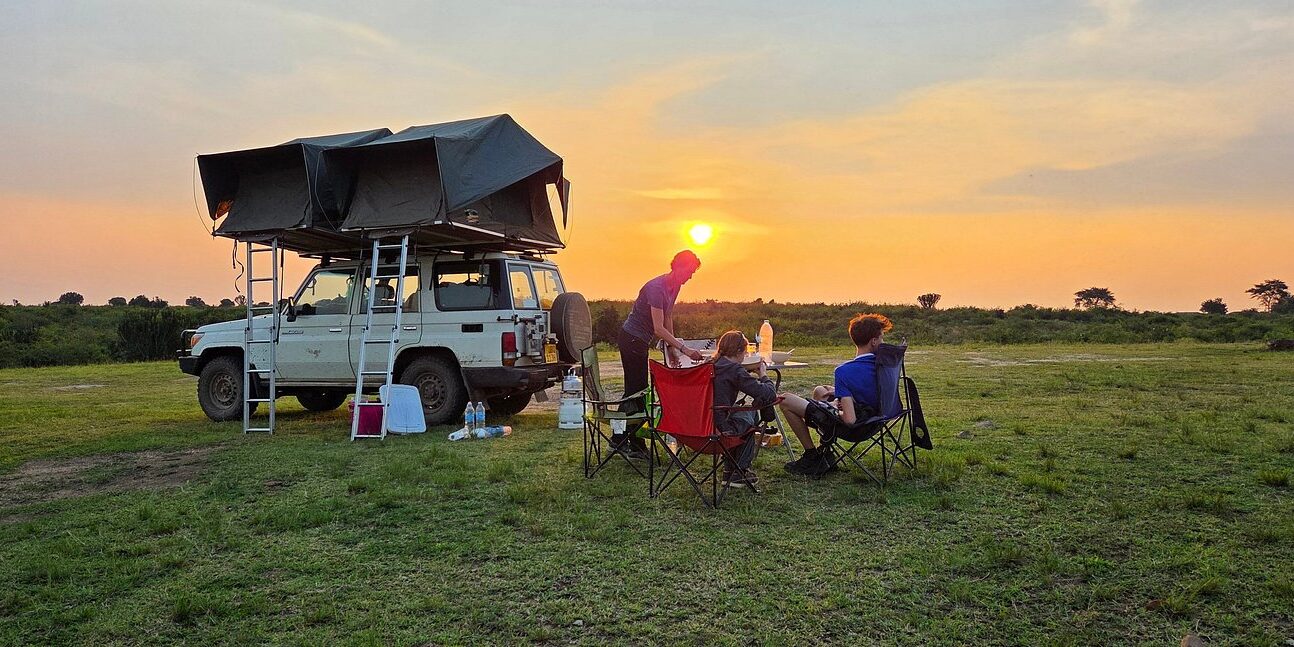
Now that you know where you will be going and how long you will be traveling, it is time to rent your car, camping gear rooftop tents. If you have set your budget, you can look around until you find something that works for you.
Read up on the rental agencies and their policies as some of them have additional fees. This could be due to the number of drivers, the driver’s age, a one-way fee, or maybe even an additional cover if you enter areas that can be considered off-road.
Download offline maps
It is always a good idea to download a roadmap of the regions you are driving through. You can do so by creating an offline map in Google Maps or using Maps Me. This way you will be able to navigate even if you have no cellphone reception.
If you drive larger distances, it might be better to create smaller offline maps. Doing so allows you to download more information and takes up less storage space.
Create a road trip playlist
As the name says, you will spend a lot of time on the road, so start creating a road trip playlist. It might not be the most important step of this road trip planner, but you will want a good playlist when you spend hours on the road.
Add your favorite songs about hitting the open highway and do not forget to click download them. Otherwise, you will quickly exhaust your mobile data.